The Banana Plant
The banana plant is the largest herbaceous flowering plant. Banana plants are among the fastest growing of all plants. Although they grow very big they are not trees and have some characteristics similar to grasses. The stem is formed from the leaves before they open.
The Banana Fruit
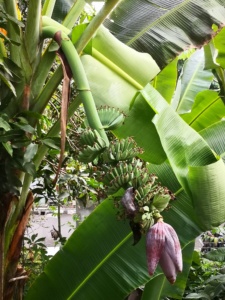
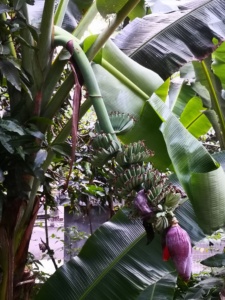
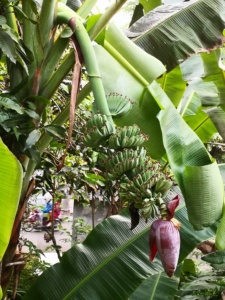
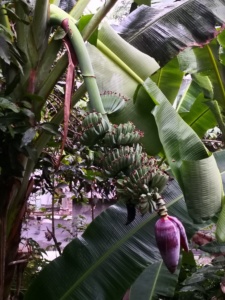
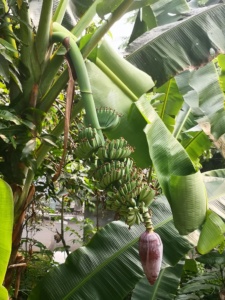
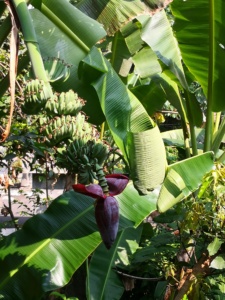
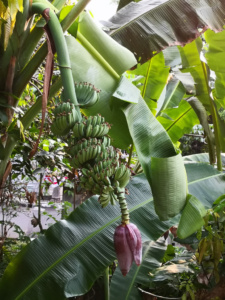
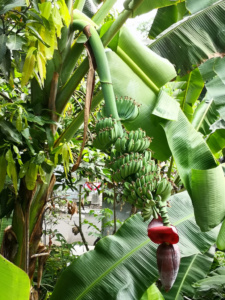
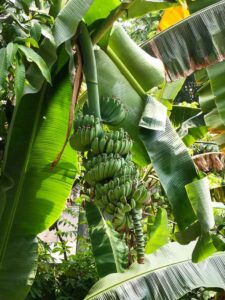
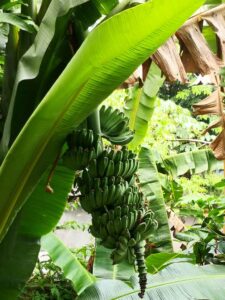
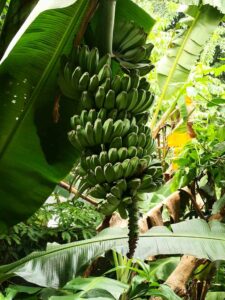
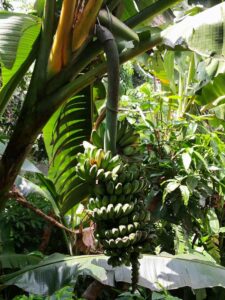
The banana fruit grows from banana blossoms in hanging clusters, also called a bunch. The fruit grows in rows called tiers or hands. The hands are made up of fingers, which we call bananas.
Each banana has a protective outer layer called peel or skin. The fleshy part inside can be split into three segments. It is the only known tri-segmented fuit. Both the skin and inner part can be eaten. The fleshy part contains vitamin C, vitamin B, fibre, lots of potassium and also iron.
In Western cultures, people generally eat the inside raw and throw away the skin. However, banana peels are high in B12 and B6 vitamins, as well as the fiber, magnesium, and potassium and may be fried or boiled to make a tea.
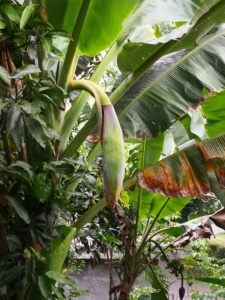
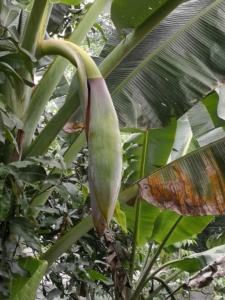
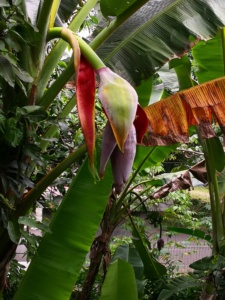
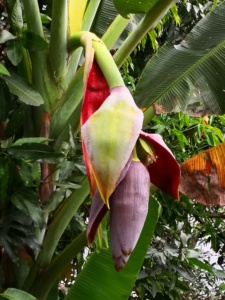
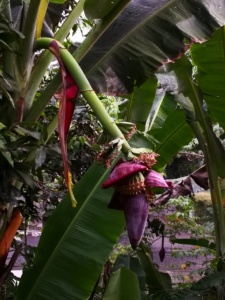
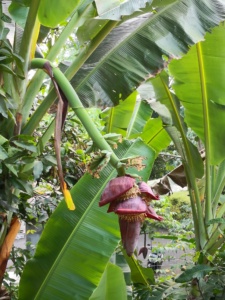
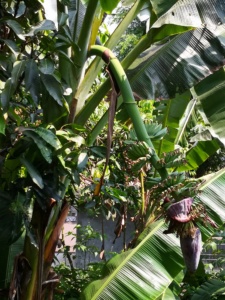
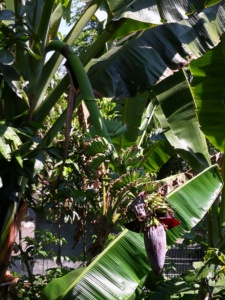
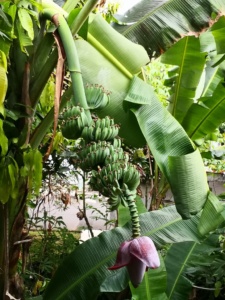
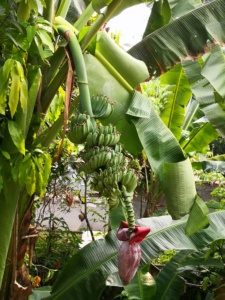
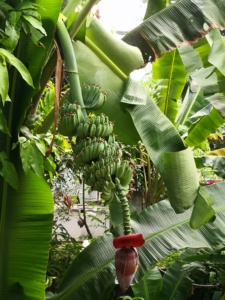
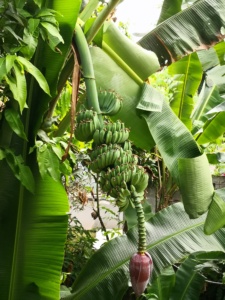
In the pictures below, on the 24th July, the flower bud started to open as the purplish bracts peeled back and the first blossoms appeared, which are female. Each day a new tier of blossoms opened, the blossoms developed into fruit and the bracts fell off. This continued until the 3rd August and up to this point, the flowers were female and had ovaries that formed into fruit. However, past this point the blossoms were male, so did not contain ovaries that develop into fruit.
The above process did not require pollination and is called parthenogenesis. Although no more fruit is formed, the bud continued to open. In practice, after some time, when the remaining bud is smaller, it is cut off and used in cooking, so is not wasted.
The time taken for the banana fruit to develop to the point where it is starting to ripen will depend on many factors including the type of banana plant, the soil and the weather. From the opening of the flower bud to appearance of yellowing of bananas at the top of the bunch as can be observed in the pictures below was 150 days, or almost 5 months. If the bunch is left too long, the ripening fruit will attract animals, such as bats, squirrels and palm civets which will eat the ripening bananas.
In the pictures below, to see the development over the 5 month period you can just scroll down the page. For another way to compare pictures, click F11 and click on the top left-hand image. The picture will open and you can go through the pictures in date order using the > icon. The < icon will allow you to go back to a previous picture. Can you see a yellowing banana on the last picture?