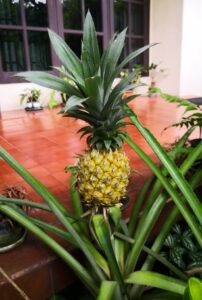
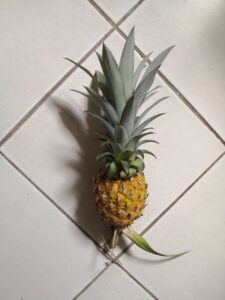
The Pineapple Plant
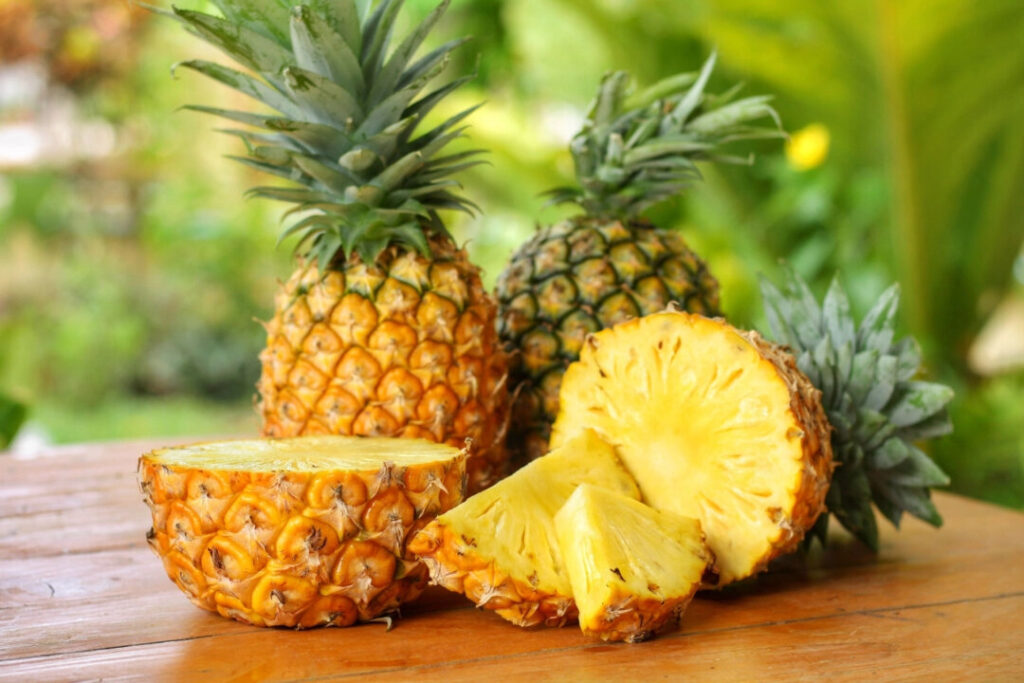
The pineapple (Ananas comosus) is a tropical plant with an edible fruit. It is indigenous to South America, where it has been cultivated for many centuries and was introduced to Europe in the 17th century.
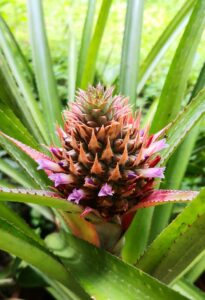
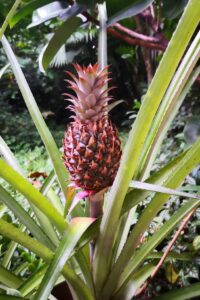
Pineapples grow as a small shrub; the individual flowers of the unpollinated plant fuse to form a multiple fruit. The plant can be propagated from the offset produced at the top of the fruit, or from a side shoot. It takes about one year for the plant to mature. The pineapple can grow up to 1.5 m tall depending on the variety. The weights of the fruit vary from 1 – 3 kg, however the variety found in Bogor may only weigh 0.75 kg.
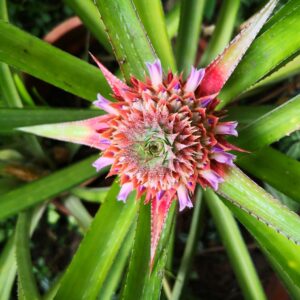
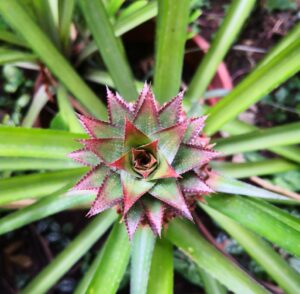
The plant has a short stem with tough, waxy leaves. When creating its fruit, it can produce up to 200 flowers. Once it flowers, the individual fruits of the flowers join together to create one large fruit. It has 30 or more narrow, fleshy, trough-shaped leaves that are 30 to 100 cm long, surrounding a thick stem; the leaves have sharp spines along the margins. In the first year of growth, the axis lengthens and thickens, bearing numerous leaves in close spirals. After 12 to 20 months, the stem grows into a spike-like inflorescence up to 15 cm long with over 100 spirally arranged, three-petalled flowers, each subtended by a bract.
The most important substance in pineapple is the proteolytic enzyme, bromelain which helps break down the protein molecules in food for better absorption and digestion. It also has anti-inflammatory and analgesic properties. Pineapples contain fiber, vitamin C, potassium, magnesium, copper, flavonoids and phenolic compounds, which are anoxidant compounds, including quercetin and beta-carotene.